
A familiar erectile dysfunction drug has produced an unexpected signal in cancer research. The Viagra cancer metastasis study suggests sildenafil may restrict tumor spread by disrupting how cancer cells handle cholesterol.
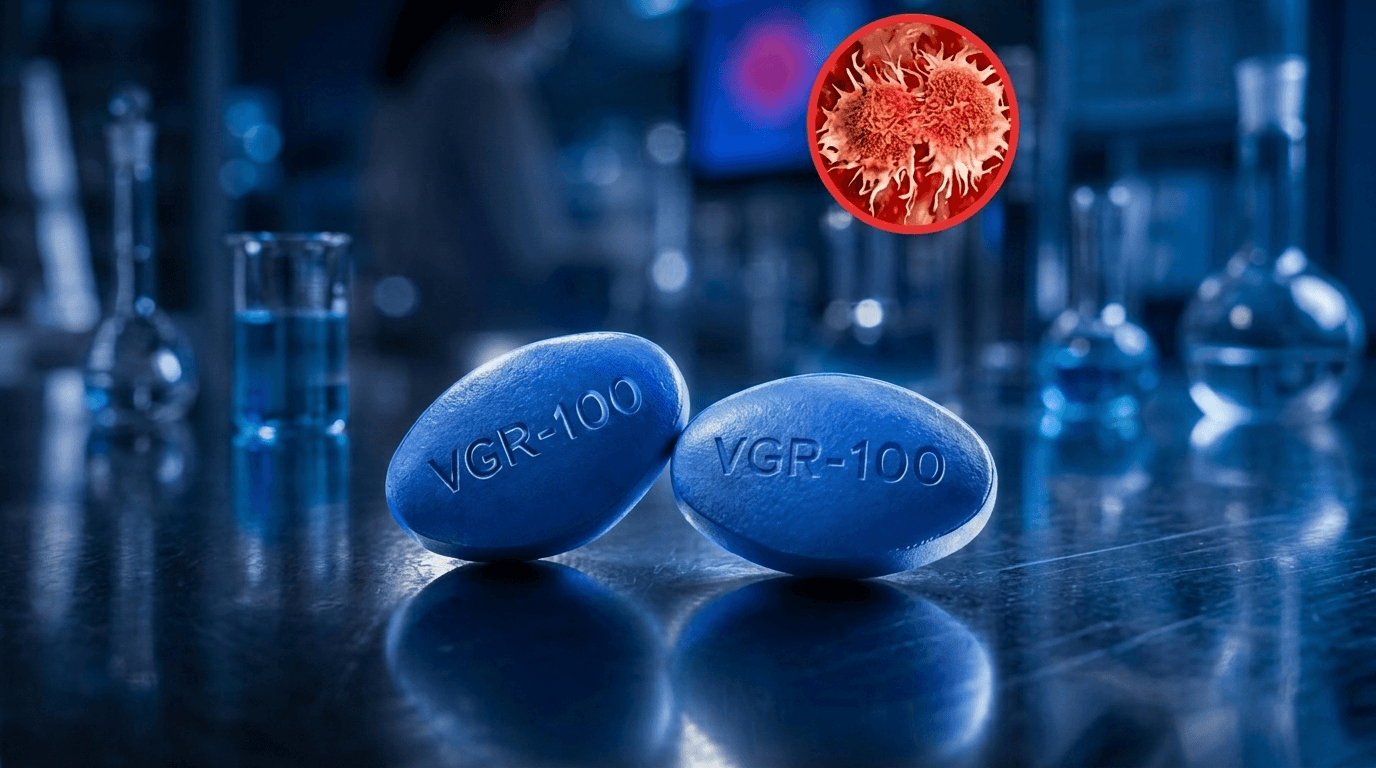
Researchers combined laboratory models, human cancer cells, and long term health records. However, the findings do not show that Viagra treats cancer in patients. But the new study shows how Viagra could stop cancer spread by suggesting sildenafil may restrict tumor spread by disrupting how cancer cells handle cholesterol.
What the Viagra Cancer Metastasis Study Found
Scientists at the Weizmann Institute of Science led the new work. Dr. Yarden Ariav worked in Professor Ayelet Erez’s laboratory on the study. The paper appeared in Cancer Research in 2026. Researchers focused on sildenafil, the active ingredient in Viagra.
Sildenafil blocks an enzyme called phosphodiesterase type 5, or PDE5. As a result, levels of the signaling molecule cGMP rise inside cells.
Novel Role for cGMP and NPC1 Interaction
That effect is already central to sildenafil’s established vascular action. However, the team found another role for cGMP inside cancer cells.
The molecule interacted with NPC1, a protein that transports cholesterol from cellular storage compartments. Therefore, less cholesterol became available for other cellular needs.
Cancer cells depend heavily on cholesterol when they detach, migrate and invade distant organs. Meanwhile, limiting that supply made metastatic behavior harder in experimental models. Viagra shows promise in reducing cancer metastasis through this newly discovered mechanism, offering a fresh explanation for how PDE5 inhibition affects tumor movement.
Cholesterol Transport Became the Key Biological Target
Cholesterol does far more than circulate in the bloodstream. Cells use it to build membranes and organize important signaling structures.
Metastatic cancer cells face especially demanding conditions while moving between tissues. Therefore, disrupting cholesterol access can create a serious metabolic problem for those cells.
Viagra can slow cancer?!
— Nuseir Yassin (@nasdaily) August 16, 2026
This sounds crazy. But after 14 years of research and 5 million health records… Professor Ayelet at the @WeizmannScience may have found something huge. This is NOT a cure. But it gives me hope. pic.twitter.com/MZLGyjeQkD
NPC1 Interference and Lysosomal Trapping
The researchers found that higher cGMP levels interfered with NPC1 activity. As a result, cholesterol became trapped inside lysosomes instead of reaching other parts of the cell.
The study also linked this shortage with disrupted membrane structures and weaker mitochondrial energy production. Moreover, cancer cells tried to compensate by increasing their own cholesterol synthesis.
That response gave the researchers another possible therapeutic opening. Instead of attacking one tumor mutation, the approach targets a metabolic dependency used during metastasis. However, laboratory success does not guarantee the same effect inside people receiving cancer treatment.
Why Sildenafil and Statins Drew Extra Attention
Statins lower cholesterol production through a different biological route. That difference made them an obvious partner for sildenafil in the experiments.
Sildenafil restricted access to stored cholesterol, while statins limited new cholesterol production. As a result, the combination attacked the same dependency from two directions.
The Cancer Research paper reported additive anti-metastatic effects from that pairing. Moreover, health-record analysis showed a stronger survival association among sildenafil users who also took statins.
Need for Clinical Trials and Caution Against Self-Medication
That finding sounds striking, but association does not prove that either medicine caused longer survival. People taking these drugs may differ from other patients in many important ways.
Therefore, researchers still need controlled clinical trials to test benefit, dosage, timing, and safety. For Ecuadorian readers, this distinction matters. The study supports further research, not self-medication with Viagra or cholesterol drugs.

What the Human Data Can and Cannot Tell Us
The research went beyond mice and isolated cells. Scientists also examined long-term medical data from Clalit Health Services in Israel.
The institutional report says the database covered about five million members across roughly 20 years. Meanwhile, the analysis found better survival among cancer patients who had used sildenafil.
The association appeared stronger when sildenafil and statins occurred together. However, those records remain observational evidence rather than a randomized treatment trial.
Limitations Regarding Timing and Diagnosis
Co author Dr. Samah Hayek also stressed an important limitation in the supplied reporting. Researchers examined sildenafil use before cancer diagnosis, not treatment started after diagnosis.
Therefore, the study cannot show that prescribing Viagra after diagnosis improves outcomes. The analysis also did not establish stronger effects for particular cancer types.
In addition, the clinical dataset mainly reflected men because sildenafil is commonly prescribed for erectile dysfunction. That means the human data cannot establish an equivalent survival association in women.
The Survival Signal Is Promising, Not Clinical Proof
Real world health records can reveal patterns that deserve closer testing. However, they cannot fully remove differences between people who did and did not receive medicine.
Age, cardiovascular health, cancer stage, treatment access, and other factors can affect survival. Therefore, researchers cannot treat the observed survival gap as proof of an anti cancer effect.
The laboratory findings strengthen the biological argument because they identify a plausible mechanism. Moreover, mouse models and patient-derived cancer cells showed changes consistent with reduced metastatic capacity.
Together, those lines of evidence make the signal more interesting. Still, none replaces a prospective clinical trial in cancer patients.
Doctors would need evidence showing which cancers respond, when treatment should begin, and which doses remain safe. Researchers would also need to compare sildenafil with current standard cancer therapies.
Why Patients Should Not Start Viagra for Cancer
Sildenafil is an established medicine, but established does not mean risk free. It can interact dangerously with nitrate medicines and can lower blood pressure.
Moreover, cancer patients often take several drugs that may complicate treatment decisions. Starting sildenafil without medical guidance could create avoidable harm.
Therefore, patients should not use this study as a reason to change cancer treatment. The same caution applies to adding statins solely for a possible anti metastatic effect.
Clinical Trial Needs & Alternative Therapies
Researchers now need clinical trials designed around cancer outcomes rather than erectile dysfunction or cardiovascular use. Meanwhile, the new mechanism gives scientists a clear pathway to test.
It may also help researchers identify other medicines that interfere with cholesterol trafficking more selectively. That possibility could matter even if sildenafil itself never becomes a standard oncology drug.
The Viagra cancer metastasis study has opened a serious new line of investigation around cholesterol metabolism. Sildenafil disrupted that pathway in experimental systems, while real world records showed an encouraging survival association.
⚽ Own Matchday with a 100% Bonus
Betstar77 register right now, and we’ll match your deposit 100% giving you double the firepower before the ref even blows the whistle.
Drop into your betstar77 login to lock in those sharp live odds just before kickoff. Go chase a massive payout on a high speed betstar77 slot, or pull up a real seat at the live dealer tables inside the betstar77 casino.
Dominate Matchday 100% Bonus at BETSTAR77
Catch every LigaPro clash & La Tri showdown.
Play smart (18+). Betstar77 is strictly for verified users. Keep it fun, treat betting as high energy entertainment, set your limits, and stay in control.